
McMullen County Sex Offender Checks
The Texas Public Sex Offender Registry is the main public channel for a McMullen County sex offender check. Texas Department of Public Safety, or DPS, maintains the statewide data sent by local registration authorities. Select McMullen in the county field for a broad county search. A name search works best when the spelling and first name are known. An area search is more useful for checking an address, ZIP code, or nearby radius.
McMullen County has no incorporated municipality. The Sheriff therefore handles local registration for people who reside in the county's unincorporated communities. The state registry remains the public search tool, while the Sheriff is the local point of contact for registration, verification, and suspected noncompliance. Start with DPS for public records. Contact the Sheriff when the issue concerns a local duty or a status that may need current verification.
The official DPS search screen shows the statewide interface used for McMullen County results.
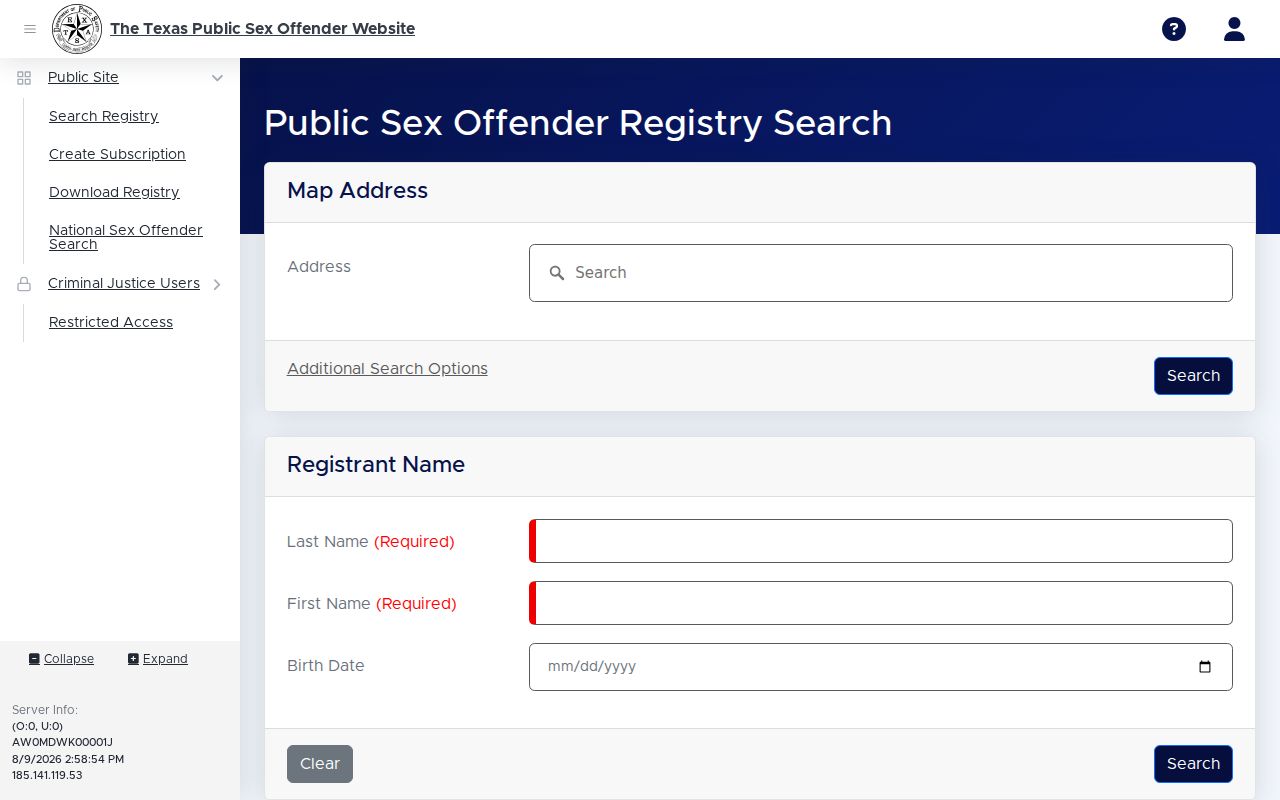
The image also shows why search type matters: a name, an area, and an institution answer different registry questions.
McMullen County Offender Registration
A registrant living in McMullen County reports through the McMullen County Sheriff because there is no city police department or municipal registration office. The Sheriff's Office is at 401 Main Street in Tilden. Its nonemergency line is (361) 274-3311. No separate registry desk hours, appointment page, or local fee has been published, so call before going to the office. Ask what identification and court or release papers are needed for the visit.
Local registration is more than an address list. The Sheriff receives required updates and forwards public data for the DPS registry. That division of work explains why a person may speak with county staff while the public sees the record through a state portal. The DPS registration program overview describes the local and state roles.
The official McMullen County Sheriff page is the local contact source. The combined County/District Clerk at the McMullen County Courthouse keeps court case files, but it does not replace the Sheriff for routine registration. McMullen County also has no local jail capacity. That fact affects custody placement, not the duty to register with the county law-enforcement authority.
The official DPS program page gives context for the McMullen County Sheriff's registration work.
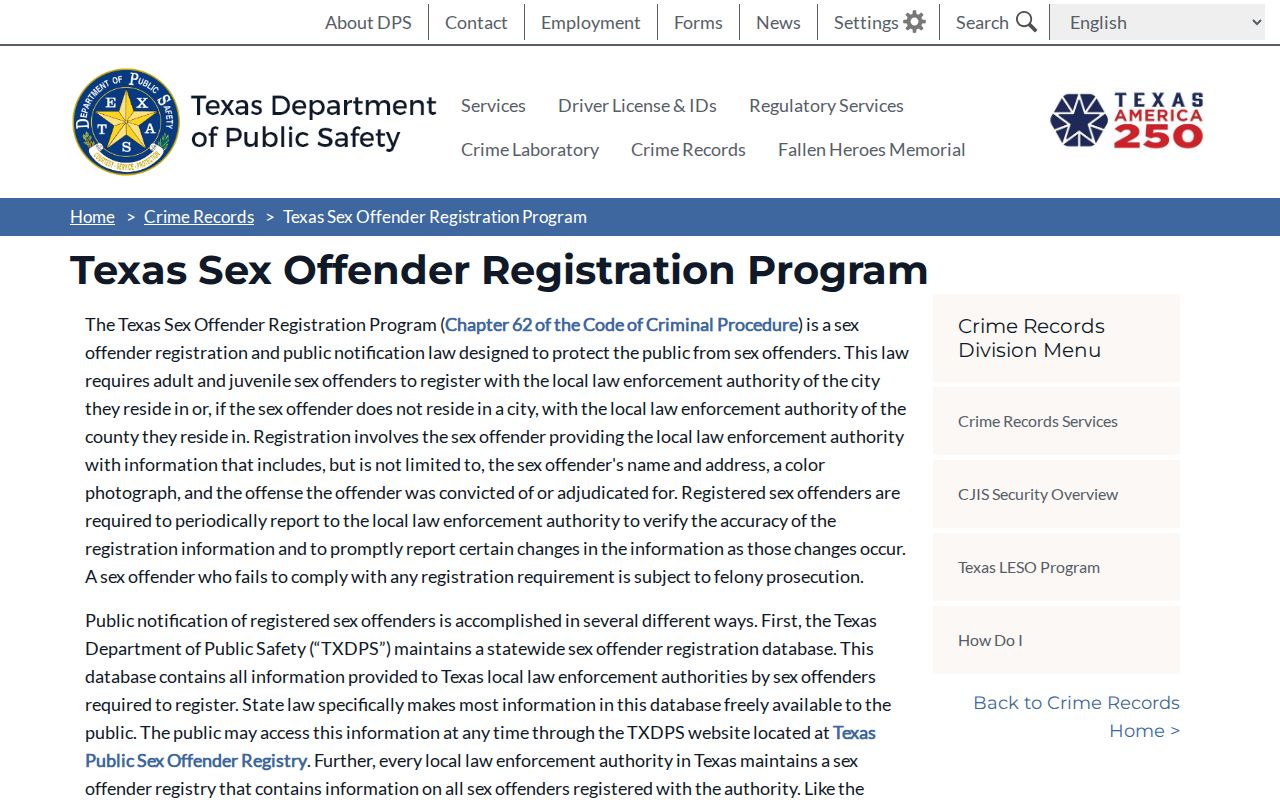
That state framework is the source of the public record later returned in a McMullen County offender lookup.
McMullen County Sheriff's Office
401 Main Street
Tilden, TX 78072
Mail: P.O. Box 242, Tilden, TX 78072
(361) 274-3311
Call for registration appointments, verification instructions, or a suspected local compliance issue.
Note: Registration duties and public search access are linked, but the Sheriff and DPS perform different parts of the process.
Texas Public Sex Offender Registry Searches
DPS offers name, area, and higher education or institution search modes. A McMullen County sex offender search can begin with a surname, or it can focus on a place. Do not assume a similar name establishes identity. Compare the full public profile, including physical details, address information, offense data, and the registration authority. Map and list views can help place a result, but each pin still needs profile review.
- Open the Texas Public Sex Offender Registry and choose the search type that fits the question.
- For a countywide search, select McMullen. For a local area, enter an address, community, ZIP code, and radius when useful.
- Review the result list or map. Match more than a name before opening a record.
- Read the complete profile, including registration authority, offense, risk level, status, and verification information.
The search controls below reflect the fields documented in the official McMullen County registry research.
| Field Label | Type | Required | Options or Notes |
|---|---|---|---|
| Search Type | Tabs or options | Yes | Name, Area, or Higher Education/Institution |
| Last Name | Text | Name search | Enter the surname |
| First Name | Text | No | Narrows a name search |
| Address | Text | Area search | Sets the place for a proximity search |
| City or ZIP Code | Text or select | No | Narrows geographic results |
| County | Dropdown | No | Select McMullen for county scope |
| Radius | Dropdown | Area search | Live options vary on the portal |
McMullen County DPS Registry Tools
The public registry has more than a standard browser search. A CRD Public account can be used for sex offender subscriptions and public registry downloads. Subscriptions can help a McMullen County resident track registry changes tied to an address rather than rerunning the same search by hand. The statewide DPS mobile app also advertises searches by location, name, route, and proximity. Route searches are useful when safety planning involves regular travel through more than one county.
Use the main DPS registry for the authoritative Texas profile. Treat an alert as a cue to open that current profile, not as proof of a new crime or a forecast of conduct. Location-based tools show where registered data place a person at the time of the update. They do not replace common safety steps or direct reports to law enforcement when current conduct creates concern.
Registry Profiles: What They Show
A public profile combines identity clues, location data, registration facts, and offense details. DPS may show a color photograph, aliases, physical traits, scars or marks, the registering authority, and qualifying vehicle information. The profile can also show the reportable offense, statute, conviction or adjudication information, victim age and gender categories when public, and institutional affiliation. Read the fields together. One similar trait or shared name is not a sound match.
| Name and Aliases | Published names and alternate names used to help distinguish records. |
|---|---|
| Photo and Description | Color photo, sex, race, age or birth date, height, weight, hair, eyes, and possible identifying marks. |
| Registered Location | Public address or geographic information and the local registration authority. |
| Offense Details | Reportable offense, statute, disposition facts, and public victim age or gender categories. |
| Risk and Duty | Texas risk level plus separate status, registration, and verification information. |
| Other Public Fields | Institutional affiliation and qualifying vehicle details when Chapter 62 makes them public. |
Some data must stay private. Texas Code of Criminal Procedure Chapter 62 excludes Social Security and driver-license numbers, phone numbers, online identifiers, employer details, victim-identifying data, and other protected information. Some juvenile registration is also ordered nonpublic.
McMullen Registry Searches Across States
The Dru Sjodin National Sex Offender Public Website, known as NSOPW, searches participating jurisdictions across the country. It is the better first layer when a person may live outside Texas, recently crossed state lines, or cannot be found with a McMullen County filter. NSOPW routes users toward the source jurisdiction. For a Texas result, return to the DPS profile for the fuller state record and current Texas registration details.
The national registry interface illustrates the cross-state search layer used beyond McMullen County.
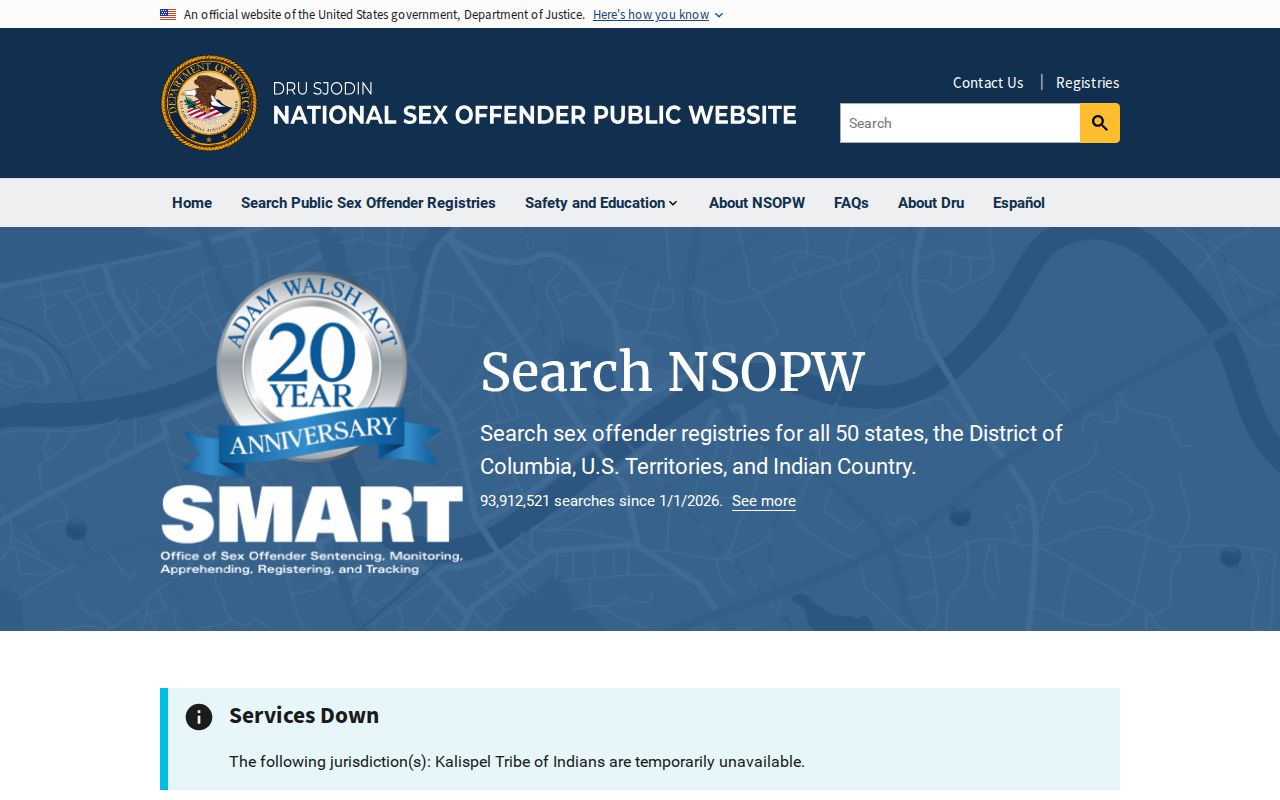
Using both layers avoids a common mistake: treating a McMullen County-only result as a complete national search.
This is a comparison of scope, not a choice between competing records. NSOPW is broad. Texas DPS is the authoritative detail source for Texas. The McMullen County Sheriff handles the local act of registration and compliance. Each channel answers a distinct part of the same public-safety question.
Note: A no-result screen may reflect spelling, scope, or jurisdiction, so try the official state and national channels before drawing a conclusion.
Registration Levels and Duties in Texas
Texas uses Level 1, Level 2, and Level 3 as a public risk scale. It does not use federal SORNA Tier I, II, and III labels for that scale. Level 1 means low danger and a low likelihood of further criminal sexual conduct. Level 2 describes moderate danger and possible continued conduct. Level 3 marks serious danger and an expectation of continued conduct. Civil commitment applies to a court-designated sexually violent predator population under a separate, intensive framework.
Risk level does not set registration length. The offense and Chapter 62 control whether the duty runs for ten years after release from incarceration, parole, or community supervision, or lasts for life. Some sexually violent and other listed offenses fall in the lifetime category. Article 62.101 contains the full current list.
The official DPS registry FAQ explains the difference between risk assessment and duration.
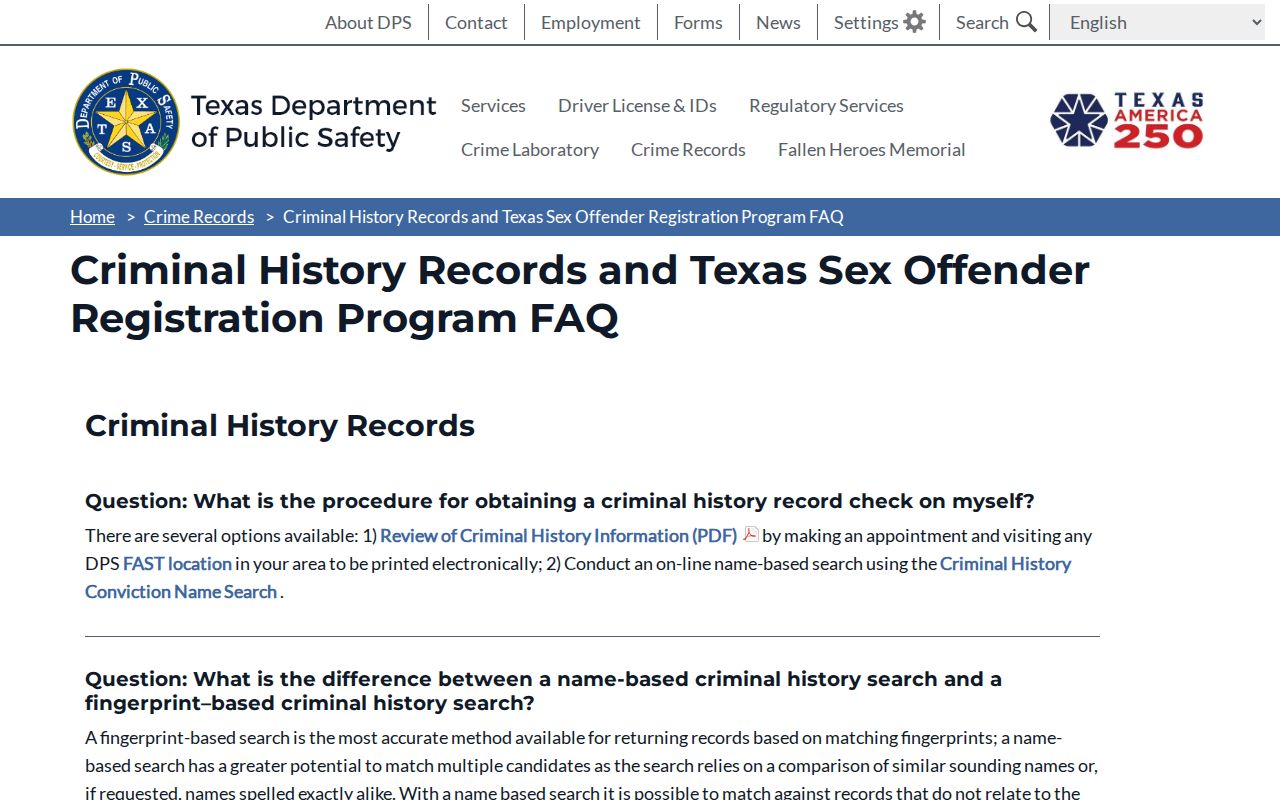
That distinction prevents a risk label from being read as the length of a McMullen County registration duty.
| Texas Category | Meaning | Registration Duration |
|---|---|---|
| Level 1, low | Low danger; not likely to engage in criminal sexual conduct | Set by the offense, not the score |
| Level 2, moderate | Moderate danger; may continue such conduct | Set by the offense |
| Level 3, high | Serious danger; expected to continue such conduct | Set by the offense; enhanced notice applies |
| Adult ten-year category | Qualifying offense outside the lifetime list | Ten years after release from custody or supervision |
| Adult lifetime category | Sexually violent and other listed Chapter 62 offenses | Until death unless statutory early termination applies |
McMullen County Level 3 Notices
McMullen County's rural, unincorporated setting matters for Level 3 community notice. DPS sends notice to addresses within a one-mile radius when the area is unsubdivided. A three-block radius applies in a subdivided area. Notices are in English and Spanish. Local authorities may also use a newspaper or circular, a meeting, posted notices, handouts, or a specialized website when additional notice is warranted.
A Level 3 notice tells the community about a high-risk classification and registration facts. It does not report a new offense. Nor does the one-mile radius act as a forecast of where conduct will occur. Residents can use the public facts for calm safety planning, confirm the profile through DPS, and report current suspicious or unlawful conduct through the proper law-enforcement channel.
Report McMullen Registry Noncompliance
If a McMullen County profile appears stale or a person may not be meeting registration duties, record the public profile details and the reason for concern. Do not confront the person or household. Call the McMullen County Sheriff at (361) 274-3311 for suspected local noncompliance. The county's official emergency services page lists the after-hours law-enforcement channel. Use 911 only for an emergency or conduct that poses an immediate threat.
Give the Sheriff facts that can be checked, such as the name shown by DPS, the registration authority, the listed location, and the public status or verification entry. A mismatch may have an administrative explanation, and county staff can compare the report with data not shown to the public. Failure to register is a felony, but law enforcement must investigate and establish the facts.
Note: Save the public record and contact the registration authority; do not post accusations or attempt to enforce Chapter 62 yourself.
Using Registry Information Lawfully
Registry information serves public awareness and safety planning. It should be read with care. A profile reflects a reportable prior offense and current registration duties. It does not prove a new offense, and a risk level does not predict a specific act. Texas also keeps victim identity, online identifiers, employer data, personal phone numbers, and other protected fields out of the public profile.
McMullen County residents can use DPS subscriptions, map results, and community notices to stay aware. They should take safety concerns to the Sheriff. Threats, harassment, intimidation, or vigilante acts can harm victims, households, and an investigation. The public character of a registry record does not grant a right to misuse it.
Registry misuse is a crime: Do not use Texas registry information to threaten, harass, intimidate, or take vigilante action. Texas Code of Criminal Procedure Chapter 62 governs registry access and duties, while criminal threats or harassment remain subject to Texas law. Report a safety concern to the McMullen County Sheriff.